
 Save
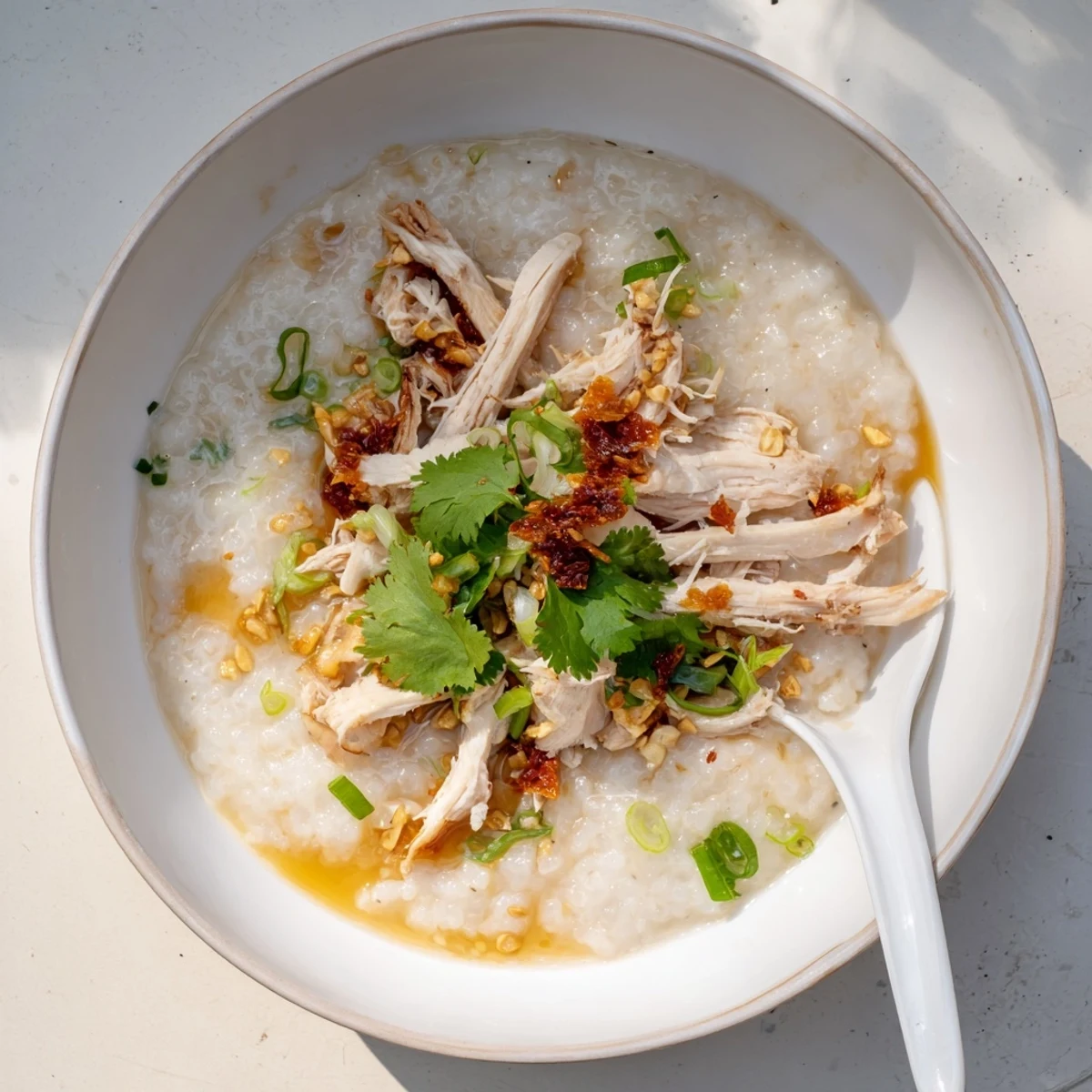
Save This classic Chinese comfort dish transforms simple rice into a creamy, velvety porridge through slow simmering. The tender chicken infuses the broth with rich depth while ginger and garlic add warmth and aromatic flavor. Ready in just over an hour, this nourishing bowl adapts beautifully to your preferences—adjust the consistency from thick to soupy, customize garnishes like crispy shallots and fresh cilantro, or pair with traditional fried dough for an authentic experience. Perfect for cold mornings, recovery from illness, or whenever you need something deeply satisfying.
My Chinese roommate in college introduced me to congee during finals week when I was running on caffeine and anxiety. She made a massive pot at 2 AM and the smell of ginger simmering away filled our tiny apartment. One spoonful and I understood why this is the ultimate comfort food across Asia. Now whenever anyone in my house is under the weather or just needing a hug in a bowl, this is what I make.
Last winter my partner came down with a terrible flu and could barely keep anything down. I made a triple batch of this congee, adding extra ginger and letting it simmer longer than usual until it was silky smooth. They ate it for three days straight and swore it was the only thing that helped them feel human again. Now whenever they hear the wooden spoon hitting the pot, they ask if Im making that magic rice soup.
Ingredients
- 2 boneless skinless chicken breasts or thighs: I prefer thighs because they stay more tender during the long simmer, but both work perfectly fine
- 1 cup long-grain white rice: Rinse it until the water runs clear to get that restaurant quality consistency
- 8 cups chicken stock or water: Stock adds depth but water works too, especially if you plan to load up on toppings
- 1 thumb-sized piece fresh ginger: Dont be shy here, slice it into coins rather than mincing so you can easily fish it out later
- 2 garlic cloves smashed: Smashed releases more flavor than chopped, plus it infuses the broth beautifully
- 1 teaspoon salt: Start with this and adjust at the end since the flavor concentrates as it cooks
- ½ teaspoon white pepper: This gives that authentic gentle warmth without the harshness of black pepper
Instructions
- Get everything into the pot:
- Toss in your rinsed rice, chicken, ginger coins, smashed garlic, and stock all at once, no need to precook anything
- Bring it to a bubble then back down:
- Let it come to a boil over medium high heat, then immediately drop to a gentle simmer and skim off any foam that rises to the top
- Let it work its magic:
- Simmer uncovered for 45 to 60 minutes, stirring every now and then so nothing sticks to the bottom
- Pull and shred the chicken:
- Once the chicken is cooked through around 20 to 25 minutes in, remove it, shred it with two forks, and return it to the pot
- Season and taste:
- Stir in your salt and white pepper, then give it a taste and adjust until it hits that perfect comforting note
- Top it like a pro:
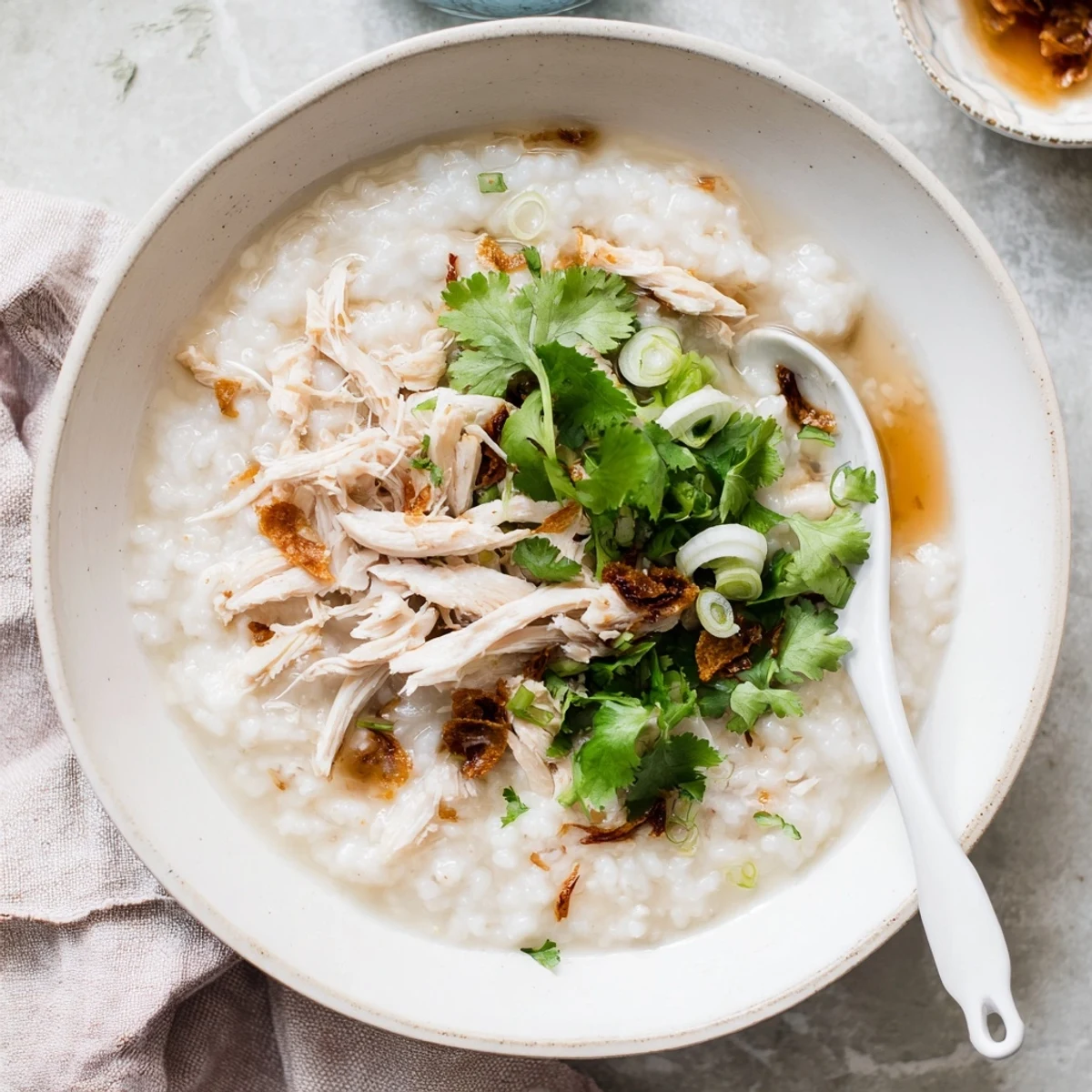
- Ladle into bowls and go to town with scallions, soy sauce, sesame oil, fried shallots, cilantro, or whatever sounds good
 Save
Save My grandmother started requesting this instead of her usual chicken soup whenever she visited, which felt like passing some kind of unofficial test. She sits at the counter with her bowl, adding extra soy sauce and white pepper until its exactly to her liking, then tells me stories about her own grandmother cooking over a wood fire. Food connects us across generations and cultures in ways I never expected until this simple rice porridge became part of our family tradition.
The Rice You Use Matters More Than You Think
Ive tried making congee with short grain, jasmine, and even brown rice out of curiosity, and long grain white rice consistently gives the best texture. Short grain turns gluey, brown takes forever to break down, but long grain releases just enough starch to create that velvety consistency while still retaining a tiny bit of structure. Rinse it until the water runs clear, and dont skip this step or your congee will end up cloudy instead of creamy.
Toppings Transform Everything
Congee on its own is lovely, but the toppings are where the real magic happens. I keep containers of fried shallots, sliced scallions, and fresh cilantro prepped in my fridge specifically for congee emergencies. Century eggs add a creamy richness if youre feeling adventurous, and a drizzle of chili oil takes it in a completely different direction. Set up a toppings bar and let everyone customize their own bowl.
Make It Your Own
Once youve got the basic technique down, this recipe becomes a canvas for whatever youre in the mood for or whatever needs using up in your kitchen. Swap chicken for pork ribs, add dried mushrooms, throw in some goji berries, or make it completely vegetarian with shiitakes and bok choy. The key is keeping the rice to liquid ratio consistent and letting your intuition guide the rest.
- Try adding a splash of rice vinegar right before serving for brightness
- Crack an egg directly into the pot during the last 5 minutes for extra richness
- Freeze portions in individual containers for emergency sick day meals
 Save
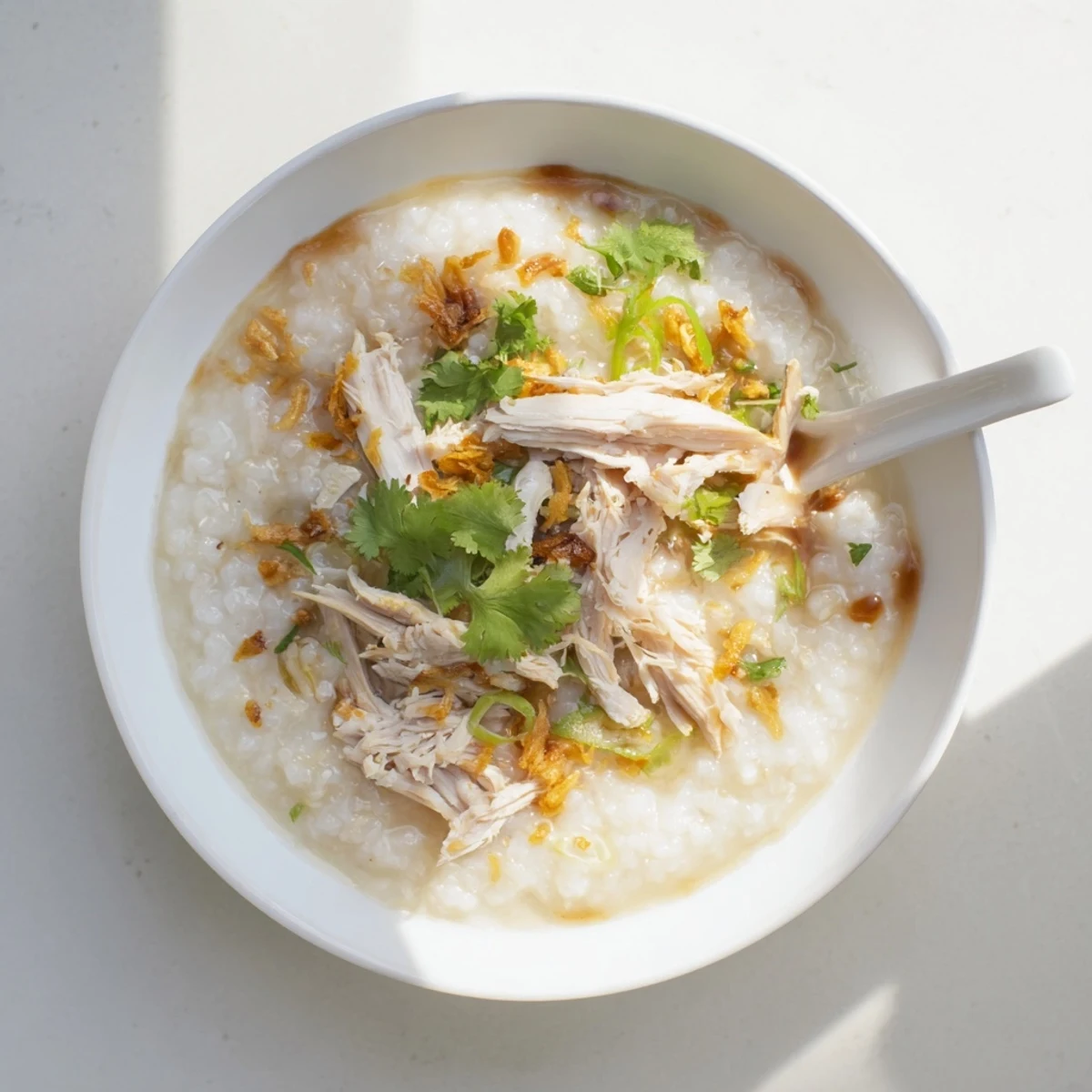
Save Theres something profoundly soothing about standing at the stove, watching rice transform into something completely different, knowing youre making food that will genuinely comfort someone. This recipe taught me that sometimes the simplest dishes, made with care and attention, are the ones that stay with us longest.
Common Recipe Questions
- → What makes congee different from regular rice porridge?
-
Congee breaks down completely during long simmering, creating a naturally creamy texture without dairy. The grains virtually dissolve into the cooking liquid, resulting in a smooth, velvety consistency unlike other rice porridges where grains remain intact.
- → Can I use brown rice instead of white?
-
Brown rice works but requires significantly longer cooking time and more liquid. The result will have a nuttier flavor and heartier texture, though it won't achieve quite the same silky creaminess as traditional white rice congee.
- → How do I store and reheat leftovers?
-
Congee thickens considerably when refrigerated. Store in an airtight container for up to 4 days. Reheat with additional water or broth to restore desired consistency, stirring frequently over medium-low heat until piping hot throughout.
- → What can I substitute for chicken stock?
-
Water creates a neutral base that lets other flavors shine, while vegetable broth works for lighter variations. For maximum depth, try combining water with a piece of dried kombu or adding mushrooms during cooking for umami richness.
- → Is this suitable for meal prep?
-
Absolutely. Congee actually improves after resting as flavors meld together. Prepare a batch on Sunday, portion into containers, and enjoy throughout the week. Just add liquid when reheating since it continues thickening in the fridge.