
 Save
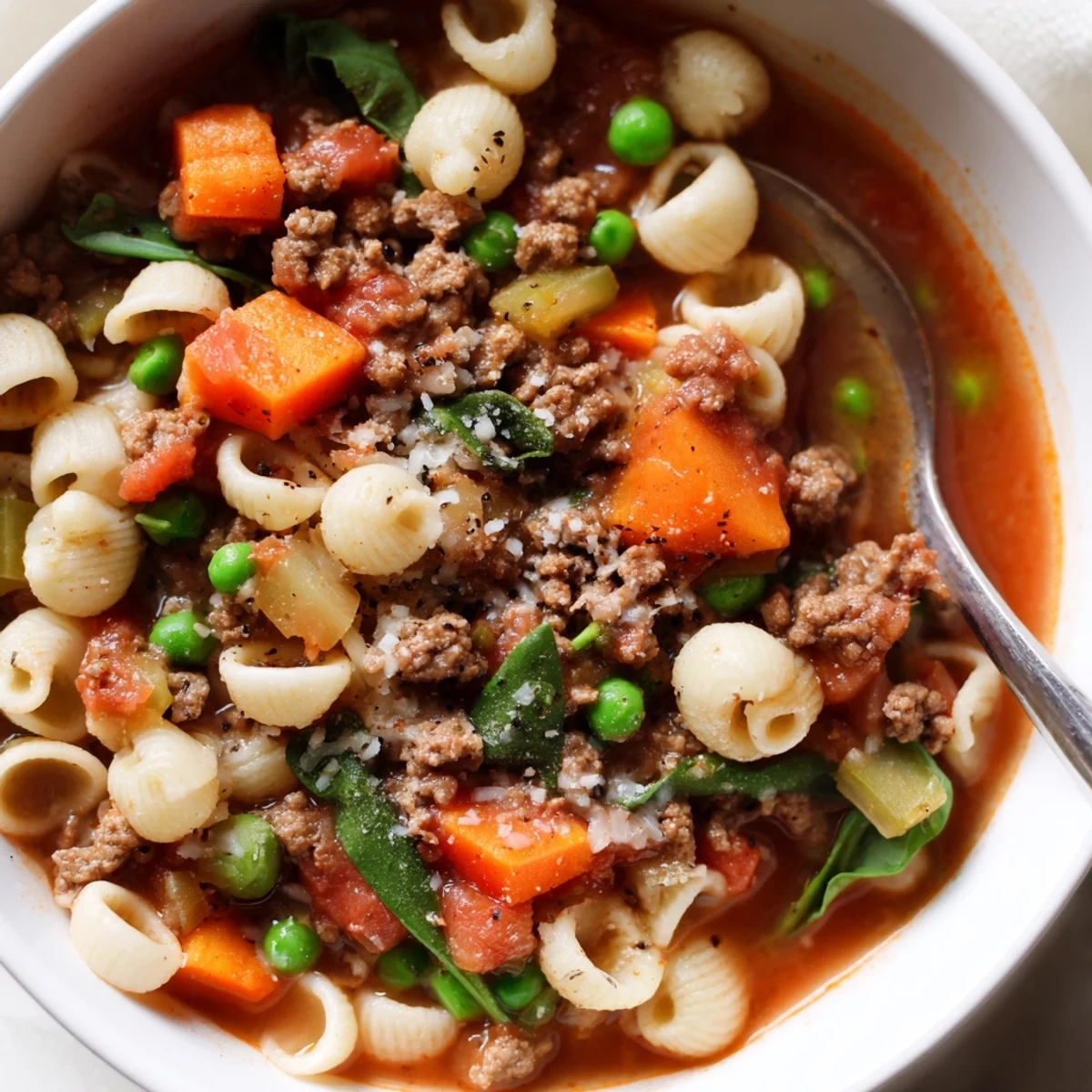
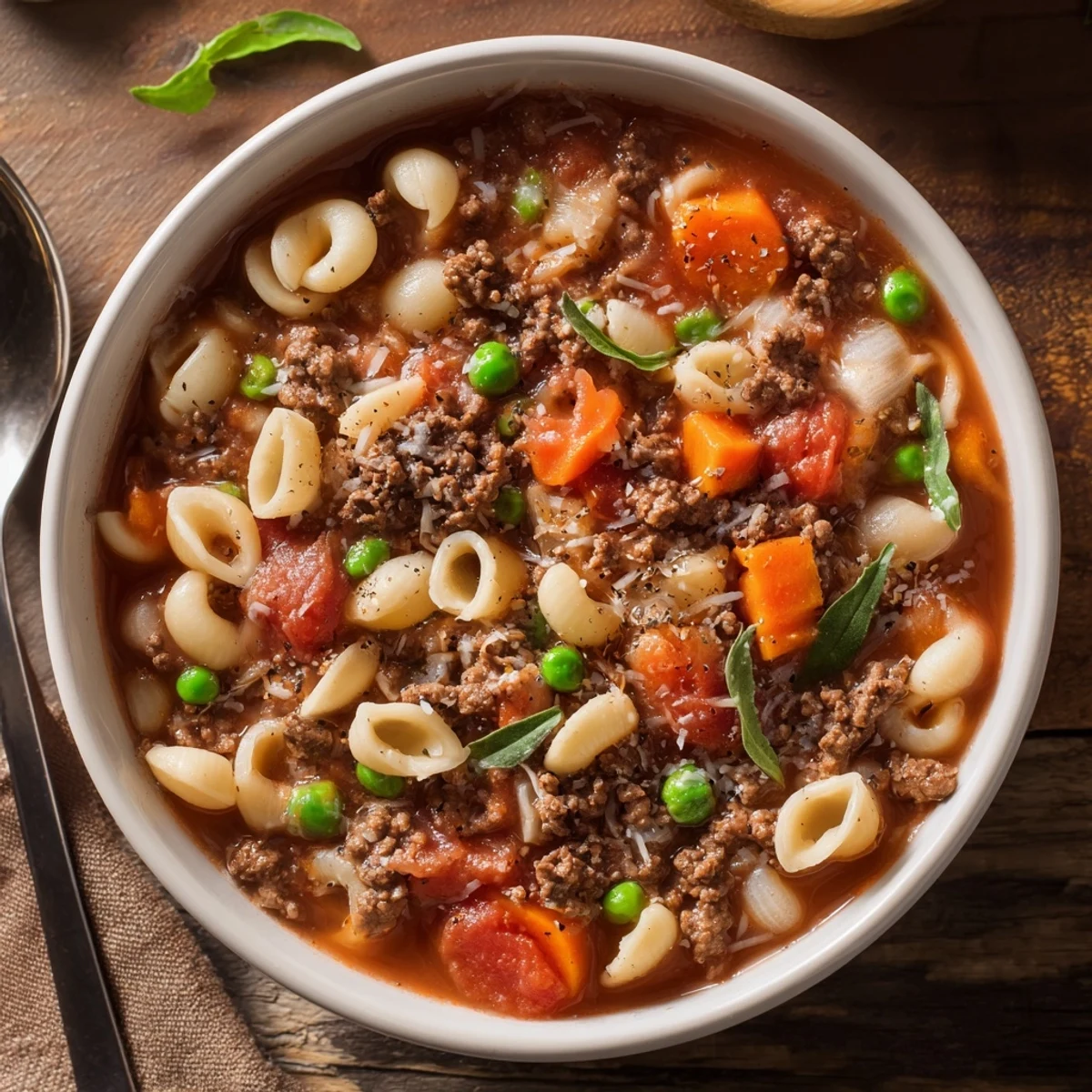
Save This comforting pot combines browned ground beef, sautéed onion, carrots and celery, garlic and dried herbs with diced tomatoes, tomato sauce and beef broth. Small pasta cooks straight in the simmering broth for about 10 minutes; peas and spinach stir in at the end. Ready in roughly 45 minutes, it serves six and can be adapted with turkey, extra veg, or Parmesan on top.
The first whiff of browning ground beef in my kitchen always signals a cozy evening ahead, but this pasta soup came about on a day I needed pure, uncomplicated comfort. Slicing carrots and celery while the savory scent filled the house felt strangely meditative. The sizzle, the gentle simmer—sometimes, dinner really is more about mood than mastery. This soup, as it turns out, became an answer for both.
I made a double batch of this soup the day a neighbor stopped by unexpectedly with her two hungry kids. There was something magical about watching the steam curl from their bowls and seeing everyone go quiet mid-slurp. The chatter returned only after seconds were served, and that’s how I knew this pot had earned its place in my regular rotation.
Ingredients
- Ground beef: For a rich base, I always use freshly ground beef and brown it well for a hearty flavor—just don’t rush the browning step.
- Onion: A diced onion melts into the soup, bringing a subtle sweetness that builds depth.
- Carrots: Peeled and sliced, carrots not only add color but soften beautifully, soaking up the broth’s flavor.
- Celery: Those two stalks lend a mellow bite; trim off any tough strings if you want extra tenderness.
- Garlic: Minced garlic is best stirred in just before the liquids, when the vegetables are soft but not browned.
- Diced tomatoes: I opt for canned, undrained, for a touch of tang and that chunky, rustic texture.
- Frozen peas: Peas go in at the end to stay bright and plump—if overcooked, they lose their snap.
- Baby spinach (optional): Toss in a handful at the very end; it wilts in seconds and boosts the soup’s nutrition.
- Small pasta shells or ditalini: Little pasta shapes soak up the broth and make every spoonful heartier, but don’t overcook or they can get soft.
- Beef broth: Homemade is lovely, but store-bought with low sodium lets you control seasoning.
- Tomato sauce: This deepens the color and adds silkiness to the base—give it a stir so it mixes evenly.
- Dried basil, oregano, thyme: These dried herbs release extra fragrance if gently toasted with the vegetables.
- Salt and pepper: Taste as you go—every broth is different.
- Olive oil: Just enough to brown meat and soften vegetables, adding complexity to the flavor.
- Grated Parmesan (optional): A snowfall of cheese on top finishes each bowl with a savory, salty bite.
Instructions
- Sauté and Brown:
- Heat olive oil in your largest soup pot until shimmering, then crumble in the ground beef. Let it sizzle and brown, stirring, until it develops those irresistible golden edges, then spoon off any extra fat.
- Soften the Vegetables:
- Scatter in the onion, carrots, and celery, breathing in the sweet aroma as they turn glossy and soft—about four minutes, stirring occasionally so nothing sticks.
- Bring Out Flavor:
- Stir in the garlic and dried herbs, letting their fragrance bloom as you scrape up any browned bits from the pot’s bottom.
- Simmer with Tomatoes and Broth:
- Pour in the diced tomatoes, tomato sauce, and beef broth; turn up the heat until the whole pot is gently bubbling.
- Add the Pasta:
- Scatter in the small pasta, stirring well so nothing clumps. Let it simmer uncovered, checking a noodle for doneness at the 10-minute mark.
- Finish with Greens and Peas:
- Two minutes before you’re done, stir in frozen peas and baby spinach (if using); watch the spinach wilt almost instantly.
- Season and Serve:
- Season the soup generously, ladle into warm bowls, and shower with grated Parmesan for the final flourish.
 Save
Save The night I served this to visiting family, we ended up with an impromptu game of cards at the kitchen table—nobody wanted to leave while there was still soup in the pot. Sometimes, one simple recipe can fill a room with joy and warmth in a way nothing else can.
Switching Things Up
The beauty of this soup is how forgiving it is, and some of my tastiest versions came from whatever was left in my fridge. Adding chopped zucchini, peppers, or a handful of corn has never let me down, and the extra veg makes the leftovers even brighter the next day.
Serving Suggestions For Cozy Vibes
I love dishing this up with crusty bread—something about soaking up the last spoonfuls always feels right. Try adding a dollop of ricotta or a crumble of feta if you want a bit more richness, or pour a glass of your favorite red wine for the grown-ups around the table.
Troubleshooting: Soup Success Every Time
After a few batches, I learned that controlling the pasta’s timing is more important than any fancy ingredient, and not to skip tasting for salt at the end. If it ever gets too thick, just thin it with a splash of water or broth as needed.
- If using gluten-free pasta, keep an eye—some brands fall apart fast.
- Store leftovers in the fridge, but know that the pasta will keep absorbing broth.
- Adding cheese right before serving keeps it from clumping in the pot.
 Save
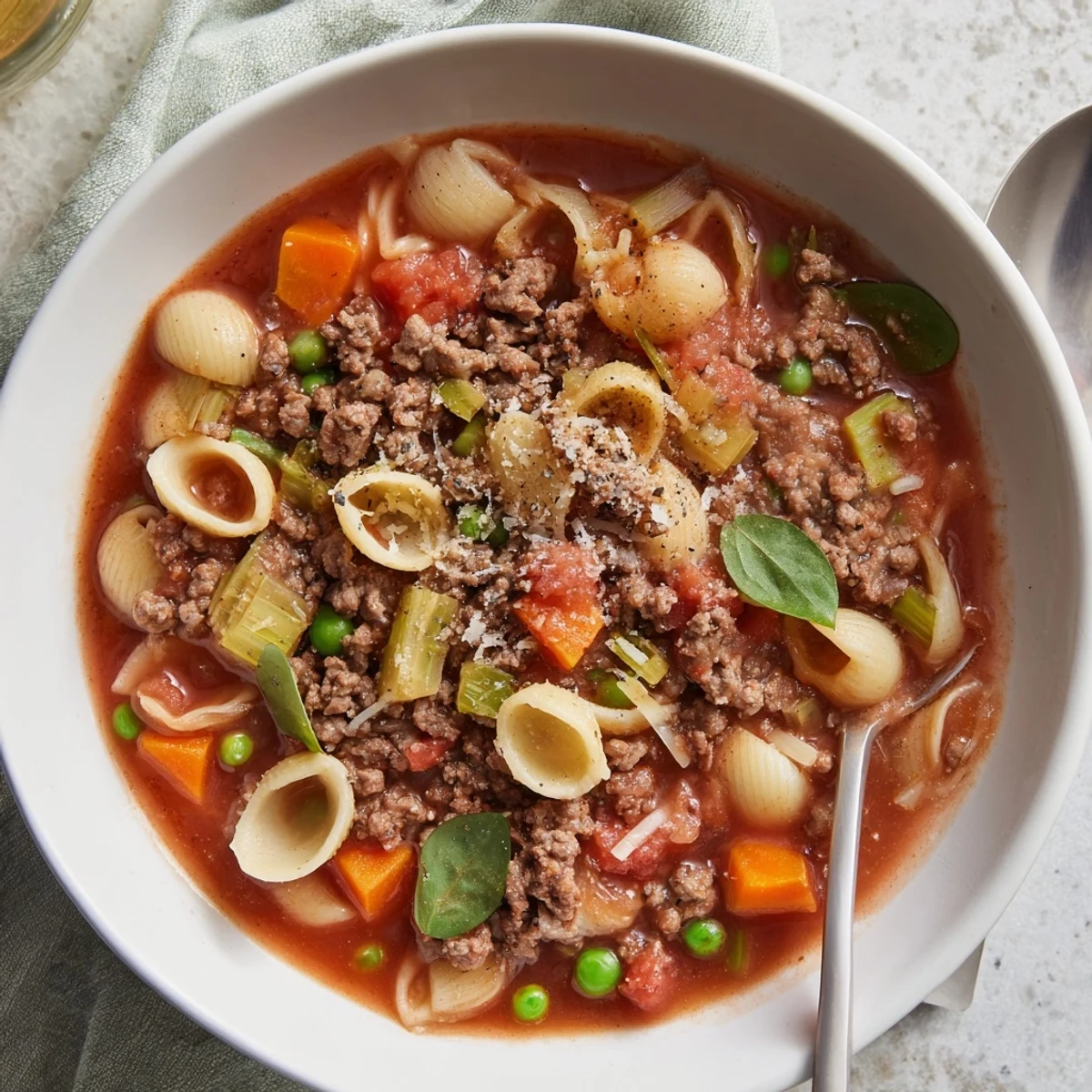
Save Here’s hoping this beef pasta soup brings as much coziness to your table as it has to mine—shared, savored, and always welcomed back for another round.
Common Recipe Questions
- → Can I swap the ground beef for a leaner option?
-
Yes — ground turkey or chicken work well. Reduce simmering fat as needed and adjust seasoning, since leaner meats may benefit from a touch more salt or a splash of olive oil for mouthfeel.
- → When should I add the pasta so it cooks properly?
-
Add small pasta shells or ditalini once the broth is simmering and cook uncovered for about 10 minutes, stirring occasionally so pasta cooks evenly and doesn't stick.
- → How can I boost the vegetable content without changing texture?
-
Dice firmer vegetables like zucchini or bell peppers and add them with the carrots and celery so they soften during the same sauté and simmer times; reserve delicate greens to stir in at the end.
- → Is it better to brown and drain the meat first?
-
Browning develops flavor; drain excess fat if you prefer a lighter broth. Leaving a little fat adds richness, but fully draining can make the finished soup cleaner-tasting.
- → How do I prevent the pasta from getting mushy later?
-
Undercook the pasta slightly if you plan to store leftovers, or cook pasta separately and combine when serving to preserve texture. Otherwise, pasta will soften as it sits in the broth.
- → What finishes pair well for serving?
-
A sprinkle of grated Parmesan, a drizzle of olive oil, or a handful of chopped parsley brightens the bowl; serve with crusty bread to soak up the broth.