
 Save
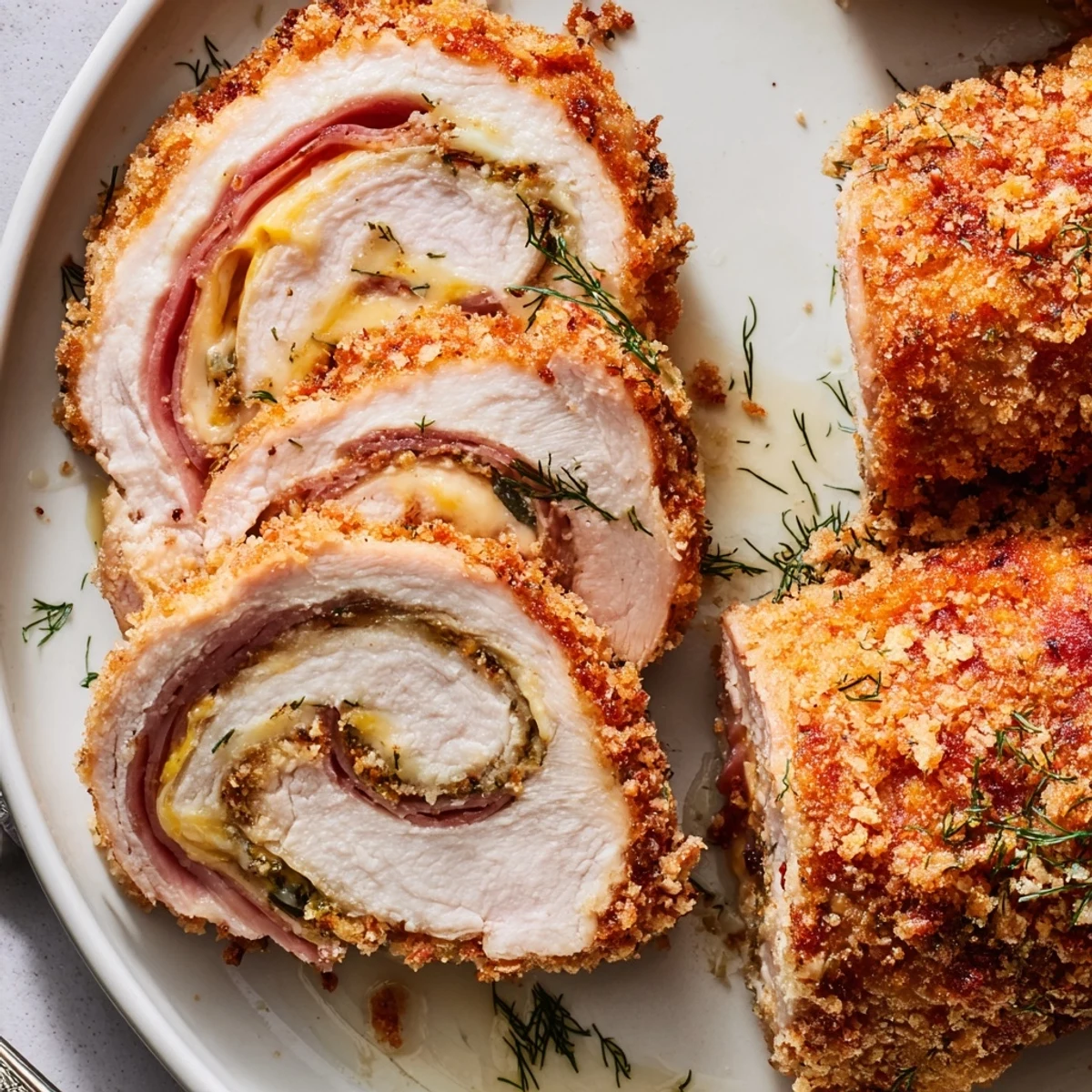
Save Brine chicken breasts in dill pickle juice with sugar and pepper for at least an hour to infuse tang and tenderize. Butterfly, pound thin, then layer cheese, optional ham and fresh herbs before rolling and securing. Dredge in flour, egg and seasoned panko, then fry briefly for color and finish in the oven, or bake until golden. Rest, slice and serve with a crisp salad or potato side.
My neighbor Dave brought over a jar of his homemade dill pickles last summer and I had more pickle juice than I knew what to do with. Thats when I started dumping it over chicken and everything changed. The tang seeps into every fiber and makes the meat practically impossible to overcook.
I made these for a game day gathering and they disappeared before halftime. My friend Rita kept asking what the secret was and I honestly just pointed at the empty pickle jar sitting by the sink.
Ingredients
- Pickle juice: Use juice from actual dill pickles, not store bought brine, because the garlic and dill already steeped in there make a huge difference.
- Sugar: Just a tablespoon in the brine rounds out the sharp acidity without making anything sweet.
- Black peppercorns: Whole peppercorns infuse gently during brining rather than overpowering the pickle flavor.
- Chicken breasts: Boneless and skinless work best since you need to pound them flat and roll them up.
- Swiss or provolone cheese: Swiss melts beautifully and pairs with the pickle tang, while provolone gives a creamier finish.
- Deli ham: Optional but it adds a salty, smoky layer that turns this into something close to chicken cordon bleu.
- Fresh dill or parsley: Fresh herbs brighten the rich filling and complement the pickle theme perfectly.
- All purpose flour: The first coat in your breading station that helps the egg adhere properly.
- Eggs: Beaten eggs act as the glue between flour and breadcrumbs.
- Panko breadcrumbs: These give a much crispier crust than regular breadcrumbs ever could.
- Garlic powder and smoked paprika: Mixed into the panko for a seasoned crust that smells incredible while baking.
- Vegetable oil or melted butter: Essential for getting that golden color whether you fry or bake.
Instructions
- Brine the chicken:
- Combine pickle juice, sugar, and peppercorns in a large bowl or resealable bag, then submerge the chicken breasts and refrigerate for at least one hour or up to four hours for maximum flavor.
- Preheat and prep:
- Set your oven to 400 degrees Fahrenheit if baking and clear your counter space for the assembly line ahead.
- Flatten the breasts:
- Pat the chicken dry after brining, butterfly each breast by slicing horizontally almost through, then place between plastic wrap and pound to a quarter inch thickness.
- Build the rolls:
- Layer cheese, ham if using, and a generous sprinkle of fresh herbs on each flattened breast, season lightly with salt and pepper, then roll up tightly tucking the sides in and secure with toothpicks.
- Set up breading station:
- Arrange three shallow bowls with flour in the first, beaten eggs in the second, and panko mixed with garlic powder and smoked paprika in the third.
- Coat the rolls:
- Dredge each roll through flour first shaking off excess, dip completely in egg, then press firmly into the seasoned panko until every surface is coated.
- Cook to golden perfection:
- For frying, heat oil in a skillet over medium heat and brown all sides for about three to four minutes per side before transferring to a baking sheet for fifteen minutes in the oven. For baking only, arrange rolls on a parchment lined sheet, drizzle with melted butter or oil, and bake twenty five to thirty minutes until golden and cooked through.
- Rest and serve:
- Let the rolls rest for five minutes so the cheese settles, then slice into pinwheels and serve hot while the crust is still shatteringly crisp.
 Save
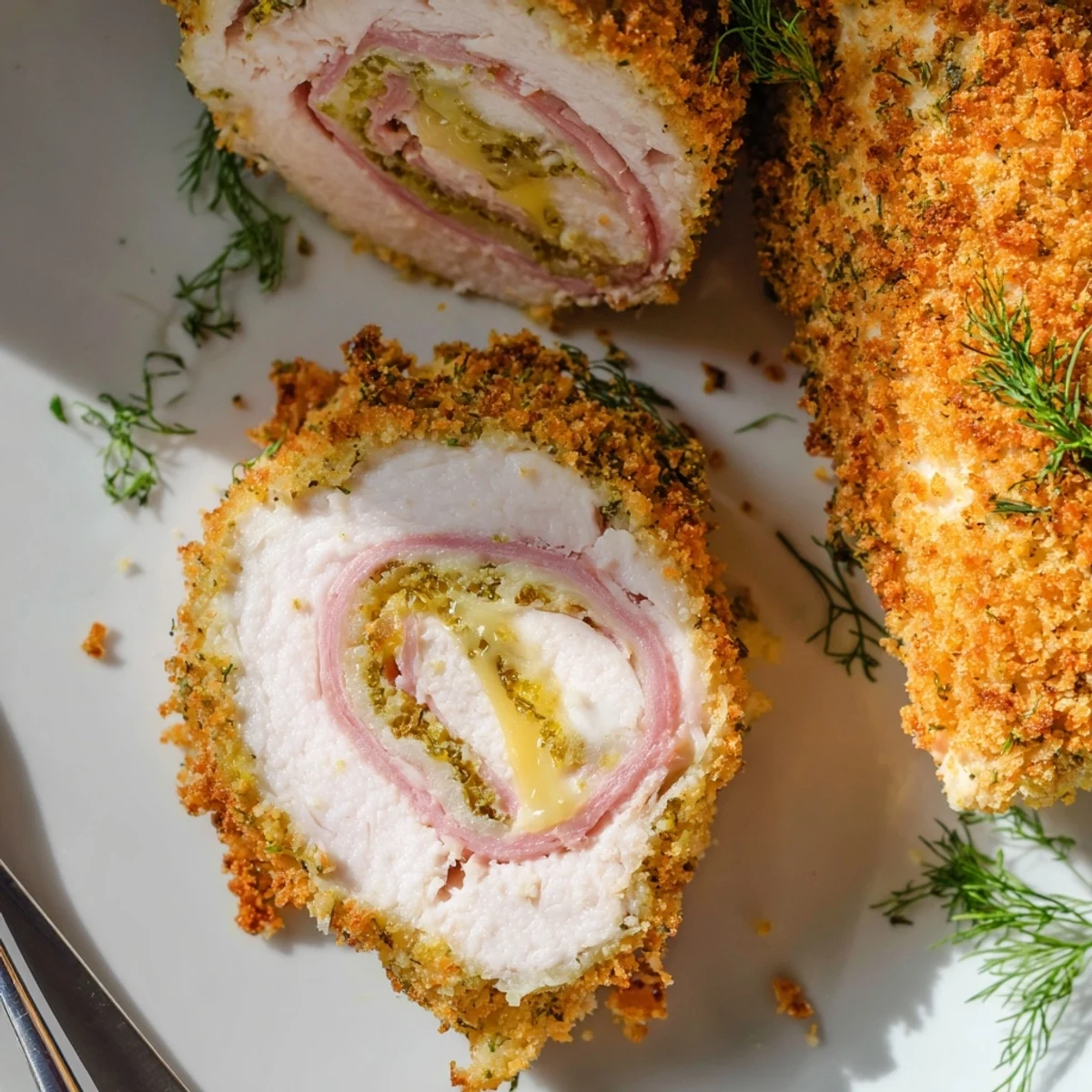
Save The first time I sliced into one of these rolls and saw the melted cheese spiraling through the center, I actually laughed out loud in my kitchen alone. It looked like something from a magazine and tasted even better.
Serving Suggestions That Actually Work
A crisp coleslaw cuts through the richness perfectly, and a cold potato salad turns this into a proper summer meal. I also love serving these alongside a simple green salad with a vinaigrette to echo the tangy notes from the brine.
Making It Your Own
Spicy pickle juice is a fantastic swap that adds a slow building heat. You can swap the ham for prosciutto, use pepper jack instead of Swiss, or fold in some caramelized onions for extra sweetness.
Getting Ahead and Storing Leftovers
You can brine the chicken overnight and assemble the rolls the next day, which makes dinner feel effortless after a long afternoon.
- Assembled but uncooked rolls freeze beautifully for up to three months, just add ten extra minutes to the bake time.
- Leftover cooked rolls keep in the fridge for three days and reheat in a hot oven to bring back the crunch.
- Always remove toothpicks before serving, because nothing ruins a great meal like an unexpected surprise.
 Save
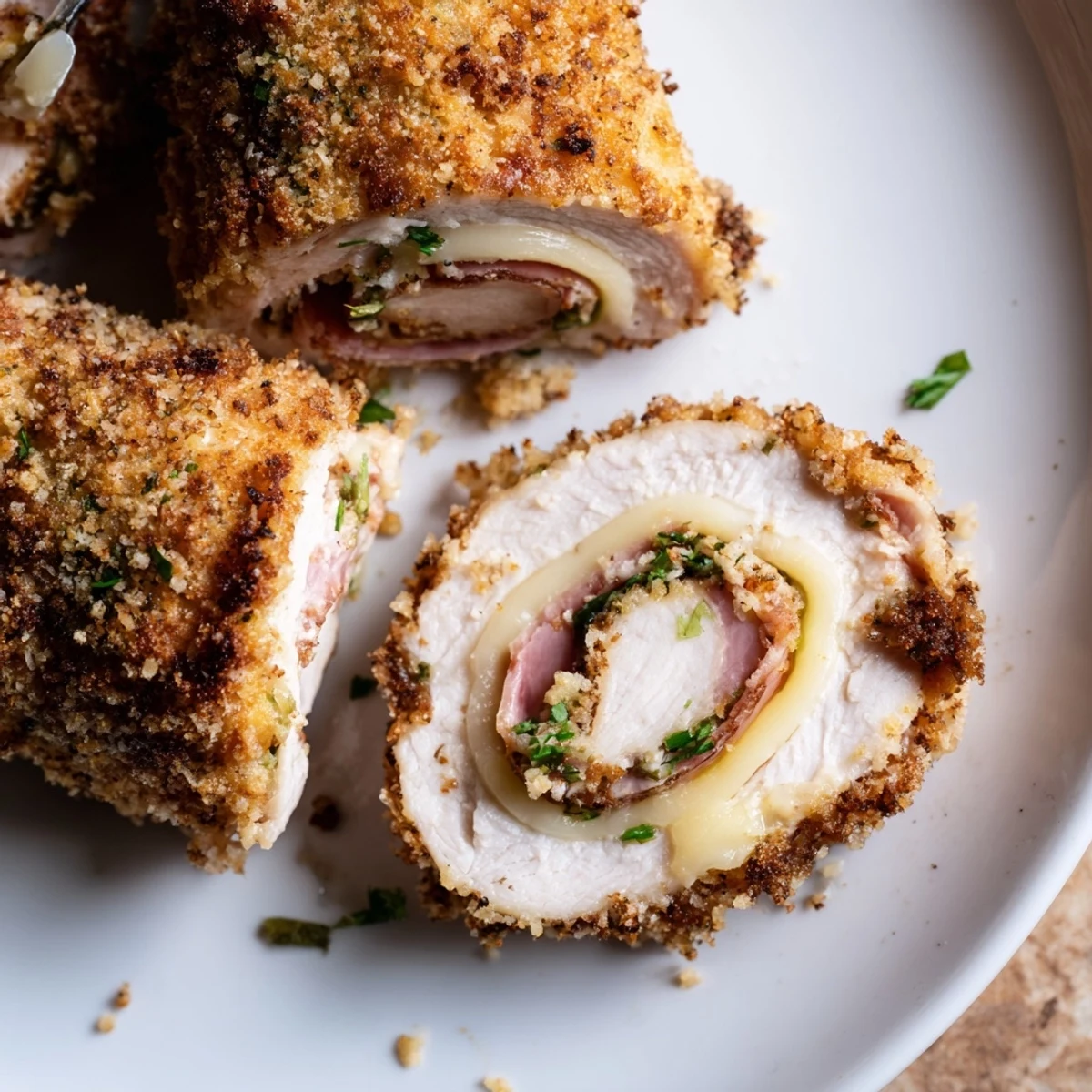
Save These crispy pickle brined chicken rolls turned a random jar of leftover juice into the most requested dinner at my table. Sometimes the best recipes come from refusing to throw something away.
Common Recipe Questions
- → How long should the chicken brine?
-
Brine for a minimum of 1 hour and up to 4 hours. Short brines add tang and help tenderize; avoid overbrining to prevent overly salty meat.
- → Which cheese works best for stuffing?
-
Swiss or provolone melt evenly and offer mild flavor that complements the pickle tang. Sharp cheddar or mozzarella also work depending on desired richness.
- → Can I bake instead of frying?
-
Yes. Bake at 400°F (200°C) for 25–30 minutes, or fry briefly to brown and finish in the oven for crispness with less oil absorption.
- → How can I make this gluten-free?
-
Use gluten-free all-purpose flour and gluten-free panko or breadcrumbs to keep the crunchy coating without gluten.
- → Any tips for rolling and securing the breasts?
-
Pound to an even 1/4-inch thickness, tuck edges tightly and secure with toothpicks. Chill briefly before breading to help rolls hold shape.
- → What internal temperature indicates doneness?
-
Cook until the thickest part reaches 165°F (74°C). Let the rolls rest a few minutes before slicing to redistribute juices.