
 Save
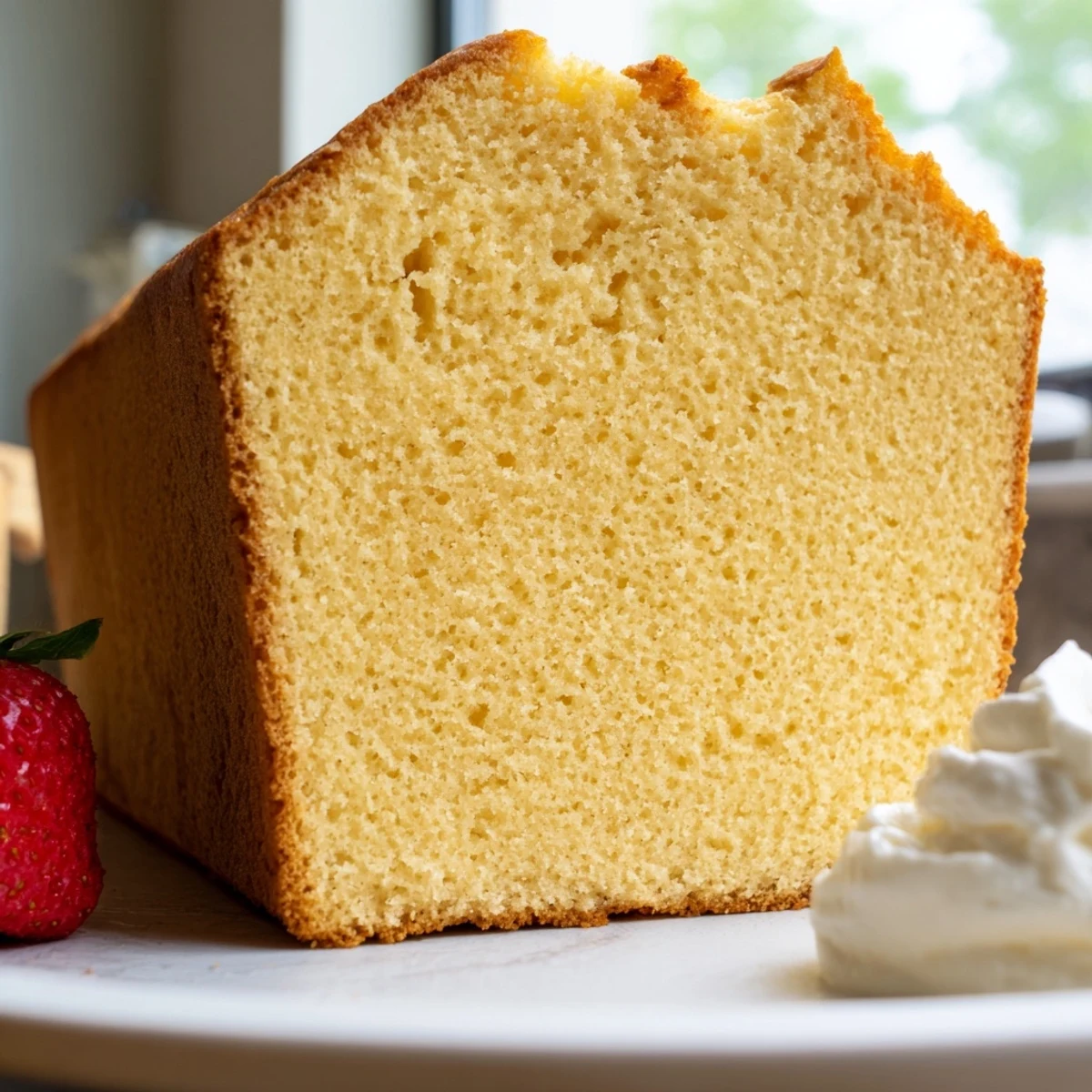
Save This classic pound cake delivers a rich, buttery flavor and a perfectly tender crumb every time. Made with simple pantry staples — flour, butter, sugar, eggs, milk, and vanilla — it comes together in about 20 minutes of prep.
Baked in a standard loaf pan at 350°F for roughly 60 minutes, it yields 10 to 12 generous slices. The creaming method is key: beating the butter and sugar until light and fluffy creates that signature texture.
Serve it plain with afternoon tea, top it with fresh berries and whipped cream, or add citrus zest for a bright twist. It stores well at room temperature for up to three days.
The afternoon sun hit the kitchen counter just right, warming the stick of butter I had left out hours earlier, and that simple moment convinced me a pound cake was the only reasonable thing to bake. My grandmother used to say pound cake is the handshake of Southern baking, simple, honest, and impossible to forget. I have made this one so many times the recipe card is soft at the edges and splattered with vanilla. It never lets me down.
I once brought this cake to a neighbor who had just moved in, still surrounded by cardboard boxes, and she stood in the doorway eating two slices before she even unpacked a single plate.
Ingredients
- 2 cups all-purpose flour: The backbone of the cake, sifted or whisked well to keep the texture light rather than dense.
- 1/2 teaspoon baking powder: Just enough lift to keep the crumb from feeling heavy without turning it into something sponge like.
- 1/4 teaspoon salt: A small amount that sharpens every flavor and keeps the sweetness balanced.
- 1 cup unsalted butter, softened: Use the good butter here since it is the star, and make sure it is truly soft but not melted.
- 1 2/3 cups granulated sugar: This amount creates that classic fine texture and gentle sweetness pound cake is known for.
- 4 large eggs, at room temperature: Cold eggs can seize the butter, so set them out early and your batter will stay silky.
- 2 teaspoons pure vanilla extract: Do not skimp on this, the vanilla carries the entire flavor profile.
- 1/2 cup whole milk, at room temperature: Whole milk gives richness that low fat simply cannot match in this recipe.
Instructions
- Get your oven ready:
- Preheat to 350 degrees F and grease your loaf pan generously or line it with parchment, letting the paper hang over the sides like handles for easy removal later.
- Whisk the dry goods:
- In a medium bowl, combine the flour, baking powder, and salt with a whisk until evenly distributed, then set it aside so it is ready when you need it.
- Cream butter and sugar:
- Beat the softened butter and sugar together on medium speed for a full three to four minutes until the mixture looks pale and feels almost fluffy when you touch it.
- Add the eggs gently:
- Drop in one egg at a time, beating well after each one, then stir in the vanilla until the batter smells like a bakery.
- Combine wet and dry:
- With the mixer on low, add the flour mixture in three additions, alternating with the milk, starting and ending with the flour, and stop mixing the moment everything disappears.
- Pour and smooth:
- Scrape the batter into your prepared pan and use a spatula to coax it into the corners, then smooth the top so it bakes evenly.
- Bake with patience:
- Slide the pan into the center of the oven and bake for fifty five to sixty five minutes, checking with a toothpick at the earlier end to avoid overbaking.
- Cool properly:
- Let the cake rest in the pan for ten minutes so it firms up, then turn it out onto a wire rack to cool completely before you even think about slicing.
 Save
Save One rainy Sunday I pulled this cake from the oven and my roommate walked in, closed her eyes, and said the house smelled like every good thing from childhood combined into one room.
Serving Ideas Worth Trying
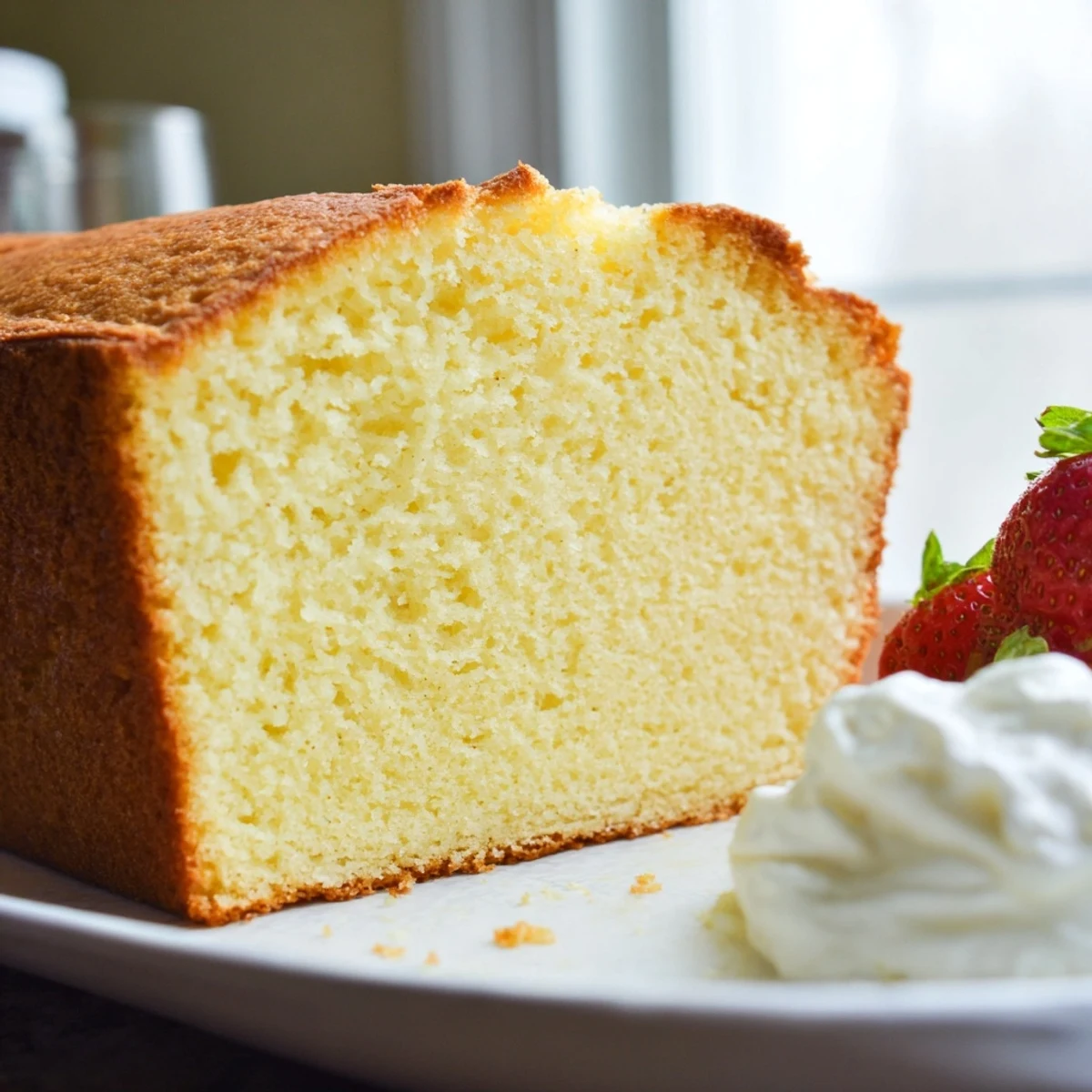
A thick slice with nothing more than a cup of black coffee is perfect on its own, but a handful of sliced strawberries and a cloud of whipped cream turns it into something truly special.
Storing It Right
Wrap the cooled cake tightly and keep it at room temperature for up to three days, or freeze individual slices wrapped in foil for a quick treat anytime the craving hits.
Little Things That Make a Difference
After making this cake dozens of times I have learned that the small details matter most.
- A tablespoon of lemon zest folded in at the end brightens the whole cake without changing its character.
- Tap the filled pan once on the counter to release trapped air bubbles before baking.
- Trust the toothpick test over the timer, ovens vary wildly and yours may be done sooner than you think.
 Save
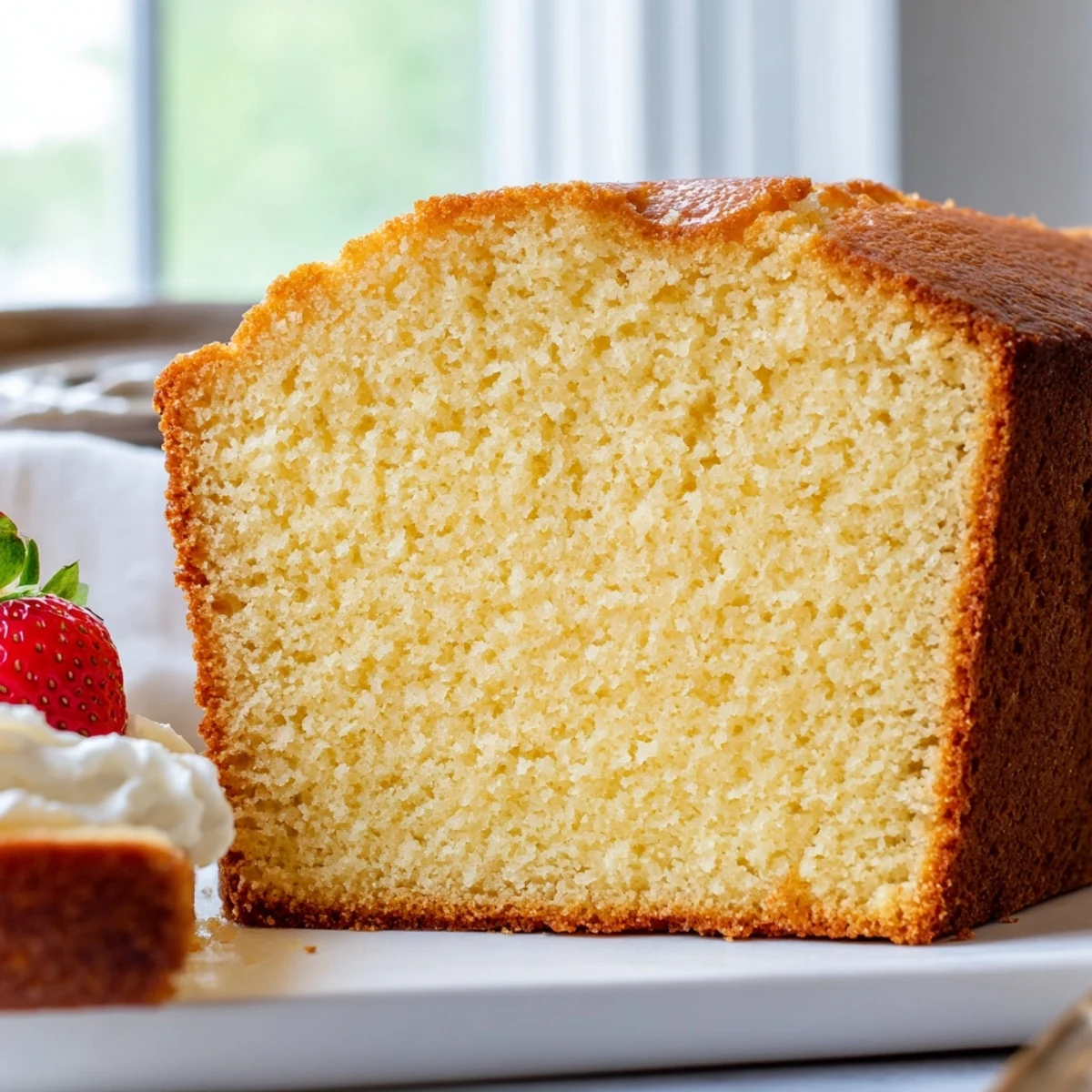
Save This cake has a way of turning an ordinary afternoon into something worth remembering, one buttery slice at a time.
Common Recipe Questions
- → Why is my pound cake dense or heavy?
-
A dense pound cake usually means the butter and sugar weren't creamed long enough, or the eggs were too cold. Beat the butter and sugar for a full 3 to 4 minutes until light and fluffy, and always use room-temperature eggs and milk.
- → Can I add lemon or orange zest to the batter?
-
Yes, adding 1 tablespoon of lemon or orange zest is a wonderful way to brighten the flavor. Fold it in with the vanilla extract for even distribution throughout the batter.
- → How do I know when the pound cake is fully baked?
-
Insert a toothpick into the center of the cake. If it comes out clean or with just a few moist crumbs, the cake is done. This typically takes 55 to 65 minutes at 350°F. The top should be golden brown and slightly cracked.
- → Can I use salted butter instead of unsalted?
-
You can substitute salted butter, but reduce the added salt to a pinch. Keep in mind that salt levels vary between butter brands, so unsalted butter gives you more consistent control over the final flavor.
- → How should I store leftover pound cake?
-
Wrap the cooled cake tightly in plastic wrap or store it in an airtight container at room temperature for up to 3 days. For longer storage, freeze individual slices wrapped in foil for up to 2 months.
- → Why do I alternate adding flour and milk?
-
Alternating dry and wet ingredients in three additions helps the batter come together smoothly without overmixing. This gentle approach keeps the crumb tender and prevents the gluten from toughening.